GIVE NOW

Sarasota · Bradenton · Lakewood Ranch

Growing minds.
Stronger
futures.

Help children learn to think for themselves, find their confidence and feel they belong. Soccer is our outdoor classroom.

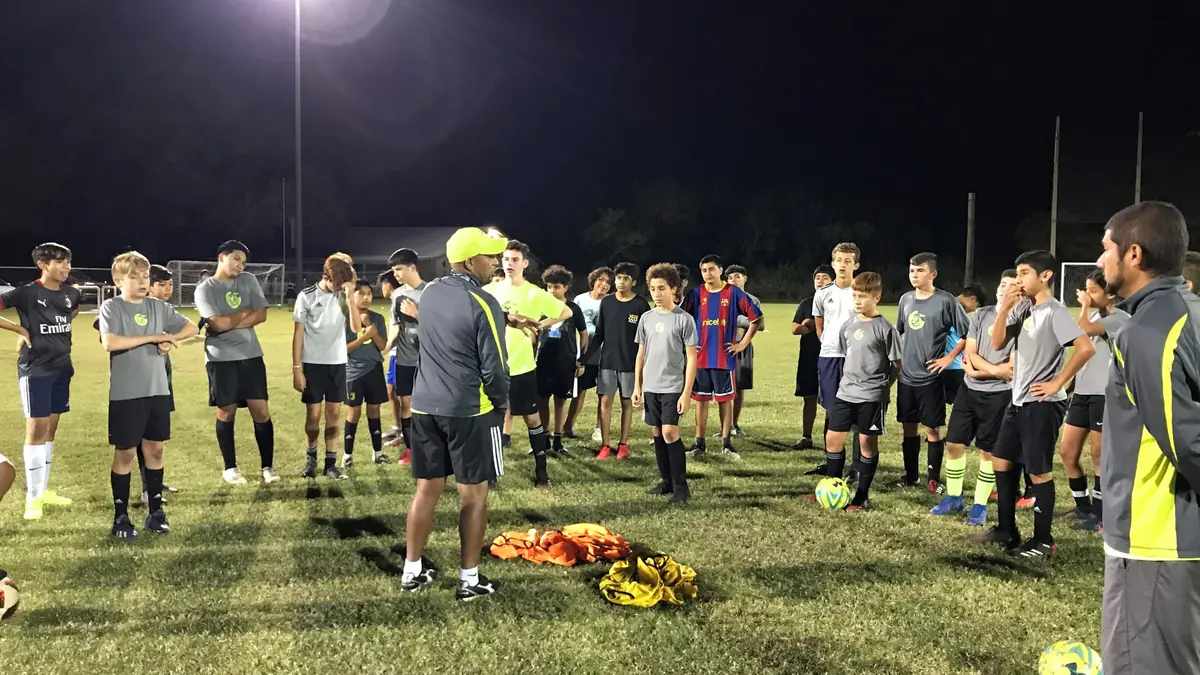
LWR FC children and coaches pause together for a discussion on the field at night
A pause in play. A question. A chance to think together. · LWR FC archive

“Playing outside should be a subject at school.”

Johan Cruyff
Cruyff Foundation · Schoolyard14 ↗

Looking for your soccer team? Programs, registration and club information live here.Visit Lakewood Ranch FC ↗

Research that gives us purpose

A growing mind.
A reason to give.

Movement, thinking and thoughtful teaching belong together. Research helps explain why our outdoor classroom matters.

SOCCER + COGNITION · RANDOMIZED SCHOOL STUDY

931 children.
11 weeks of learning through play.

“Participation in ‘FIFA 11 for Health’ for Europe improved performance in tests of attention, working memory and psychomotor function.”

Children in a program combining soccer and health education improved their test speed more than children doing usual school activities.

Lind and colleagues · European Journal of Sport Science, 2018 ↗
FLORIDA INTERNATIONAL UNIVERSITY · CHILD DEVELOPMENT

FIU research with young soccer players.

In a FIU pilot, 21 adolescent soccer players received two weeks of psychological-skills training. They reported greater confidence in their decision-making afterward.

The study measured confidence, not cognitive-test performance. It offers a useful direction for teaching mental skills through sport.

Gomez Souffront, Everett & Kostrna · AASP, 2023, p. 9 ↗

Thinking while moving

The classroom
has grass on it.

Before a pass comes a decision. Children read the space, remember a plan and respond when the game changes. Thoughtful coaching turns those moments into practice for a growing mind.

01 / ATTENTION

Look. Notice. Focus.

Find a teammate. Notice the pressure. Pay attention to what matters while the world keeps moving.

02 / DECISIONS

Think for yourself.

Weigh the options, choose a pass and explain why. A question from a coach invites a child to reason.

03 / SELF-CONTROL

Reset and try again.

Pause after a mistake. Manage frustration. Change the plan. The next moment offers another chance to learn.

From research to the field

Thinking skills can be taught.

An FIU trial with 45 preschoolers with behavioral difficulties found greater gains in executive functioning when an intensive summer program included explicit emotional-learning and self-regulation activities.

Paulo Graziano and Katie Hart’s work gives us a practical lesson: make learning intentional, and help children practice it.

Graziano & Hart · Journal of School Psychology, 2016 ↗

These findings come from other programs and guide our approach; they are not measurements of LWR FC participants. Read the study details ↓

“The social nurtures the brain. The joy nurtures the brain. The physical activity nurtures the brain.”

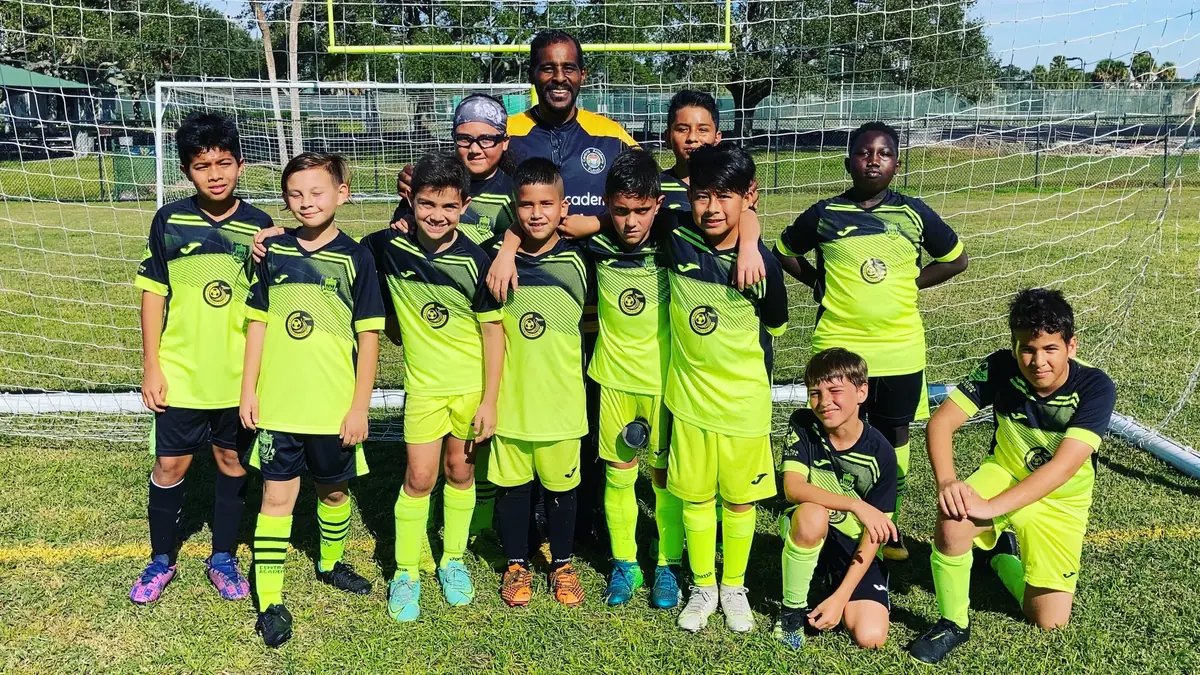
Young Lakewood Ranch FC players and their coach together in front of the goal
Our story began with the game. · LWR FC archive

Our purpose

It starts with soccer.
It grows with a child.

Every child deserves a place to belong, people to count on and opportunities to grow.

Lakewood Ranch Foundation for Children grew from our soccer club’s commitment to education and opportunity. Lakewood Ranch Futbol Club remains our flagship project.

We bring children together across backgrounds and work to remove barriers to participation. With caring coaches, the field becomes a place to ask questions, take responsibility and discover what is possible.

Confidence and character

A team to belong to.
Room to become yourself.

Being known by a coach and welcomed by teammates matters. Soccer gives children shared challenges, friendships and opportunities to practice respect.

We want young people to leave the field with confidence to try, responsibility for their choices and care for the people around them.

BelongingA place to contribute and be heard.
CharacterEncourage a teammate. Respect an opponent.
WellbeingActive time, connection and caring adults.
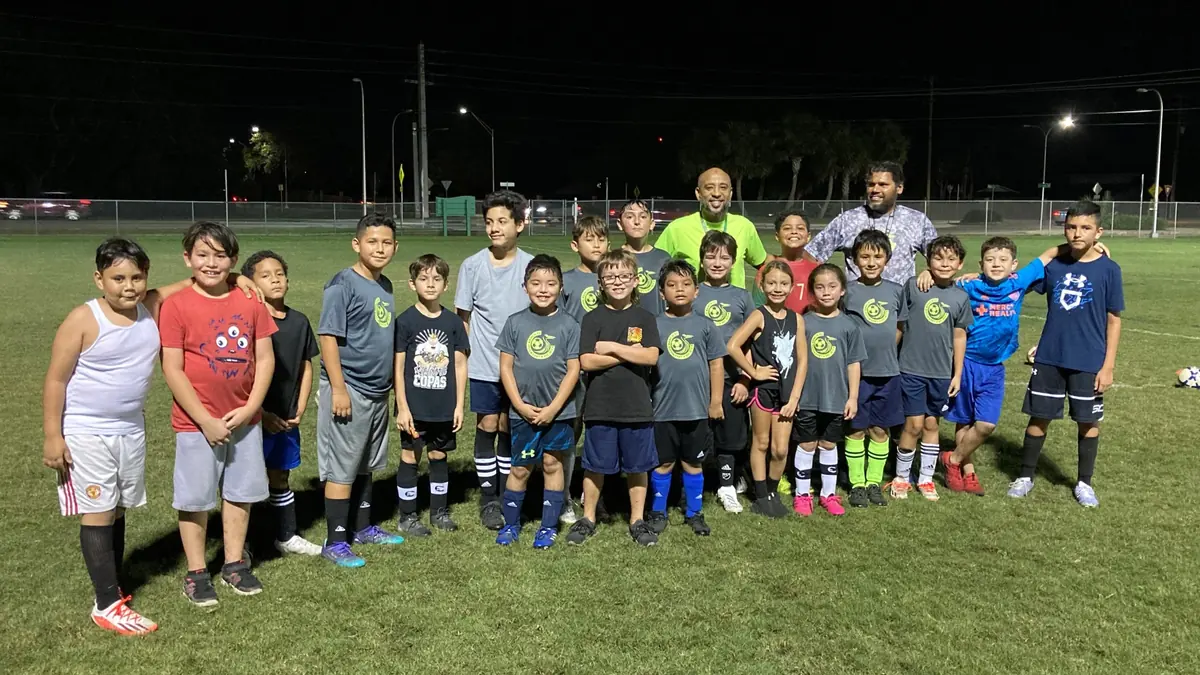
Lakewood Ranch FC children and coaches smiling together on the field
Different backgrounds. A shared team. · LWR FC archive

In development

Our next chapter

We are developing more ways to connect soccer with learning, mentoring and family support. Our next steps include deeper educational activities and partnerships that help us understand and strengthen children’s growth.

Impact

9 years

1000+ kids helped

By 2019, just our second year as a nonprofit, we had already helped 27 children with over $39,000 in scholarships.

Imagine what we can do with your help.

Our 2019 scholarship milestone ↗

Your part in the story

Help a child
find their next
possibility.

Your gift helps fund education, coaching, fields and gyms, equipment, and of course scholarships: the people, places, and means that make this outdoor classroom possible.

Help more children have a place to play, learn and belong.

GIVE NOW Give your time or become a partner
Research sources & what each study tells us

We use research to inform our educational direction. The studies below concern other programs and populations; they do not establish outcomes for LWR FC or imply an endorsement by their authors.

  1. Soccer and cognition: Lind and colleagues, 2018. In an 11-week trial of 931 children, a combined soccer-and-health curriculum improved attention, working-memory and psychomotor test speed relative to usual school activity.
  2. FIU’s soccer pilot: Gomez Souffront, Everett and Kostrna, 2023 conference abstract. A 21-player pilot found improved decision-making self-efficacy after psychological-skills instruction. The related journal paper describes the outreach program.
  3. FCC’s reported cognitive-skill progress: FCC International’s 2025 SIMEON monitoring summary, reproduced in a public LinkedIn post, reports a 13.12-percentage-point gain in its cognitive dimension.
  4. Soccer and Latino family engagement: De la Vega-Taboada, Pérez-Del Oro and Stephens, FIU, 2024. Nine parent interviews about FCC identified cultural connection, perceived benefits and convenient access as reasons for participation.
  5. Intentional teaching at FIU: Graziano and Hart, 2016. A randomized study of 45 preschoolers with behavioral difficulties found broader school-readiness gains from an enhanced summer program. It included explicit self-regulation and emotional learning.
  6. Movement and thinking: Hillman and colleagues, 2014. The nine-month FITKids trial found gains in selected executive-control measures after an activity program.
  7. Team sport and wellbeing: Hoffmann and colleagues, 2022. Team participation was associated with fewer reported mental-health difficulties among more than 11,000 children.

The 2026 FCC International Forum at FIU brought together researchers and practitioners around play, relationships and youth wellbeing.